Due diligence with teeth.
Every collector car has a story. We find the receipts, and turn them into a same-day file for the desk that has to put a number on it.
01 · The Report
An independent
due-diligence dossier
on the exact car.
Molly directs a team of AI analysts to work over 200 sources on the one collector car, cite the best of them, and price it against dozens of recorded sales. Your desk gets a supportable value, the full title and ownership chain, the conditions that have to clear before funds move, and every comparable linked to the sale it came from.
Forty pages of evidence.
One number that holds up.
The Molly Report
2011 Porsche 911 GT3
The listing discloses every flaw but one. A 2018 engine-module replacement sits in the CarFax record and nowhere in the application. The collateral is right; the file is what still needs closing.
-
01
The value of record
A supportable value with tier and confidence stated, the conditions to close named, and the sales it rests on linked. Defensible to a credit committee and to the partner bank behind it.
-
02
The comparables
Every range is anchored on thirty or more recorded transactions: auction and dealer, sold and no-sale both. A failed reserve is floor evidence, not noise.
-
03
The provenance and title
The ownership chain, title events, liens, service record, factory certification status. Every gap in the chain flagged as a gap, with the document that would close it.
-
04
The conditions to close
What must clear before funds move: open recalls, unextinguished liens, undisclosed repairs, prior offerings the application left out.
-
05
The liquidation read
Orderly and forced-sale outcomes with the reconditioning line taken out, so the exposure is priced before the loan is.
-
06
The citations
Every claim traces to a source URL with an accessed date. The file shows its work, all of it, to the auditor as much as the underwriter.
From the same file
44 recorded transactions. The market is already asking above the supportable band.
The car’s own live auction is the sharpest anchor in the file. At $225,000 with a day to go, the market sits $20,000 above the supportable band with three conditions still open. An advance sized to the market rather than to the band is the exposure the file exists to catch.
02 · Molly
The first file that
answers questions.
Every Molly Report ships with a private analyst chat grounded in the file’s own evidence. Ask why the supportable value sits where it sits. Ask what closes a condition. Ask what the partner bank will question. Every answer cites the file’s own sources. Nothing invented, nothing assumed.
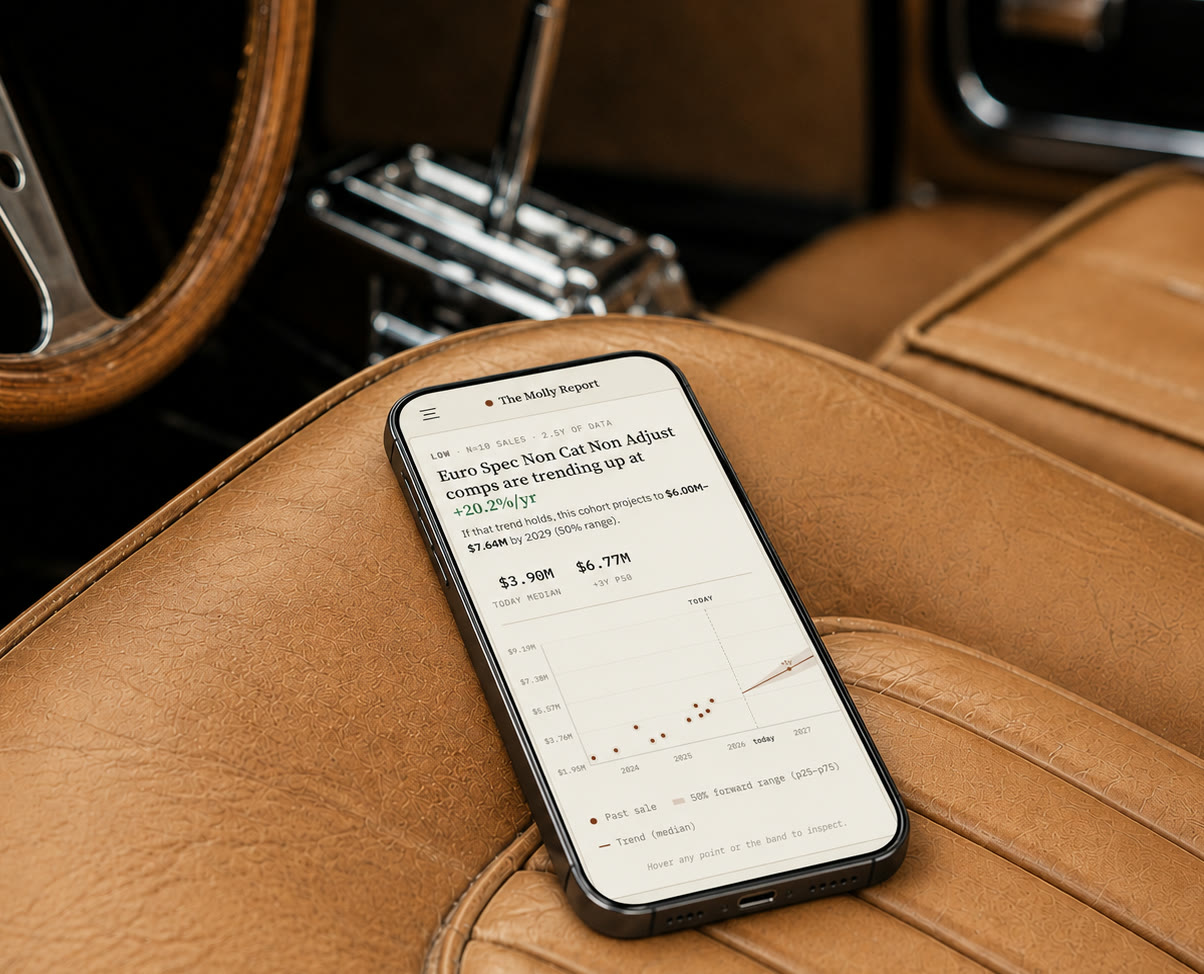
Sample exchange. Drawn from a shipped file, sources and all.
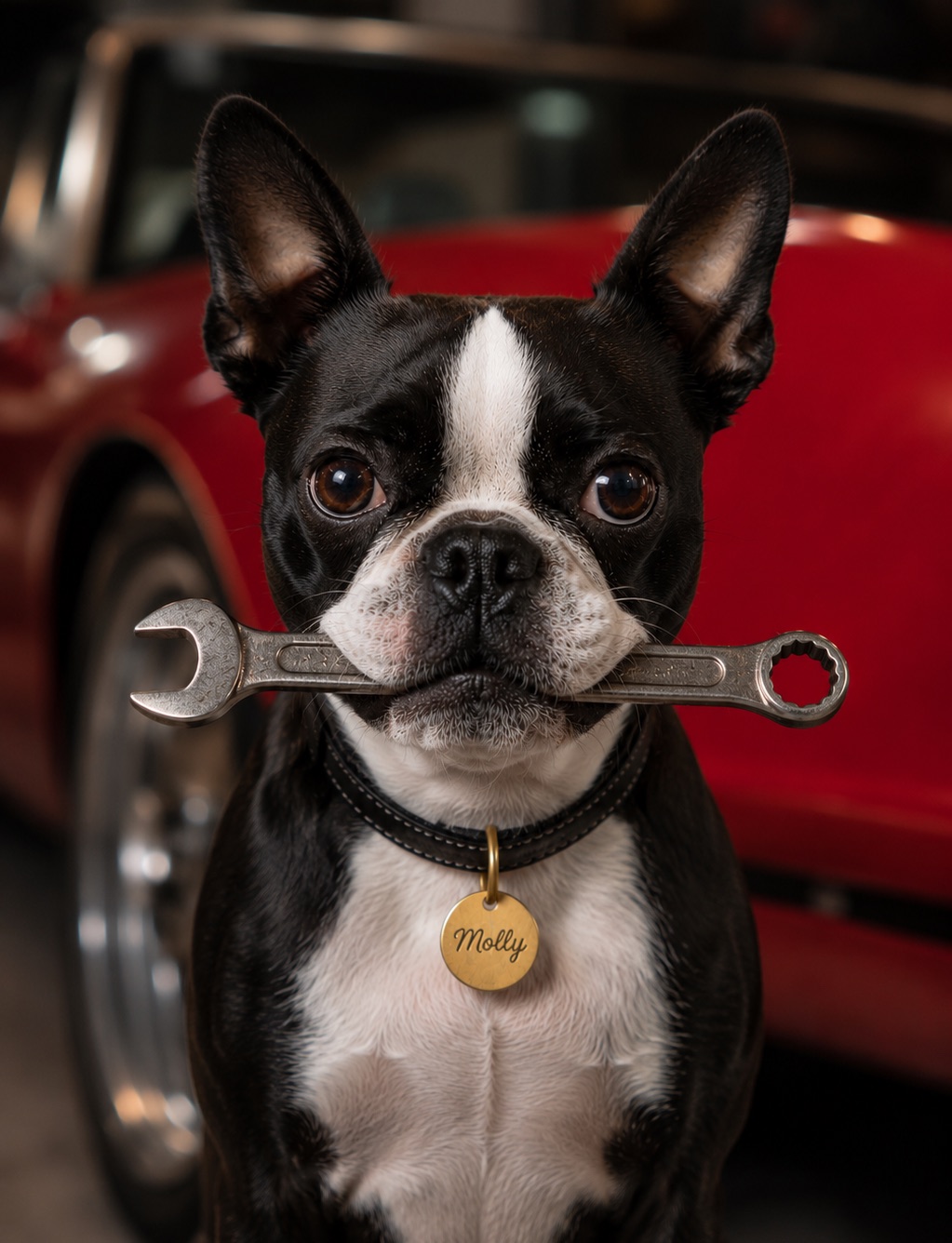
Molly answers to
no one in the trade.
Shop dog. Collector car expert. And the AI analyst behind every Molly Report.
Molly has no stake in the deal. Not the seller, not the broker, not the borrower. Her job is to fetch every receipt, every record, every red flag, and put a number on the collateral that holds up.
Names her sources, signs the value, never pads. Hedges only when the data forces it, and tells your underwriter exactly what would resolve the hedge.
One file, four seats at the table.
Lender
Loan-to-value against the supportable value, not the ask. Conditions to close named before funds move.
Dealer
Days to turn, spread to retail, where the ask sits in the cohort.
Insurer
Agreed value defended by forty-five transactions, not a feeling.
Collector
Originality, the chain, and what the next owner pays for the story.
The Molly Report is a VIN-specific dossier that talks back. Delivered fast, built for anyone staring down a serious purchase who knows that information is leverage and time is money.
Tyler Berry, CEO, Coffey & Sons
03 · The case files
One car. One file.
One number.
-
 The manual that wasn’t.
A $449,950 ask resting on a gearbox the car did not
have. Four photographs, published in the seller’s own gallery, settled it.
Read the case study
The manual that wasn’t.
A $449,950 ask resting on a gearbox the car did not
have. Four photographs, published in the seller’s own gallery, settled it.
Read the case study
-
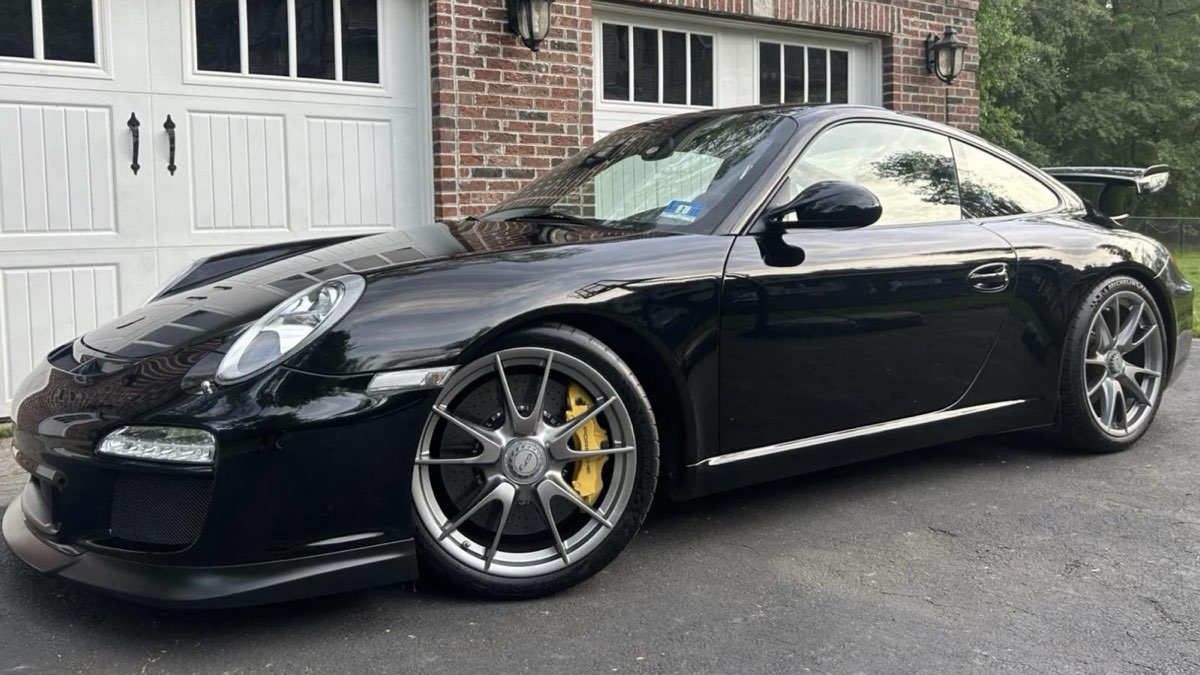 The right car. The wrong number.
A buyer who refused to buy on want alone. Thirty-four
verified transactions put the market $30,000 past anything the record could defend.
Read the case study
The right car. The wrong number.
A buyer who refused to buy on want alone. Thirty-four
verified transactions put the market $30,000 past anything the record could defend.
Read the case study
04 · Process
The file lands the same day
the VIN does.
-
I
The request
Send the VIN and the listing or application. Add the CarFax, photos, or a PPI if the file has them. Scope is confirmed before any work begins.
-
II
The sweep
Auction archives, marque registries, period press, forum history, dealer records, title and recall databases. Two to three hundred sources researched on the one car.
-
III
The appraisal
A marque specialist weighs the evidence and anchors the value on thirty or more comparable transactions. Conflicts are flagged, not smoothed over.
-
IV
The file
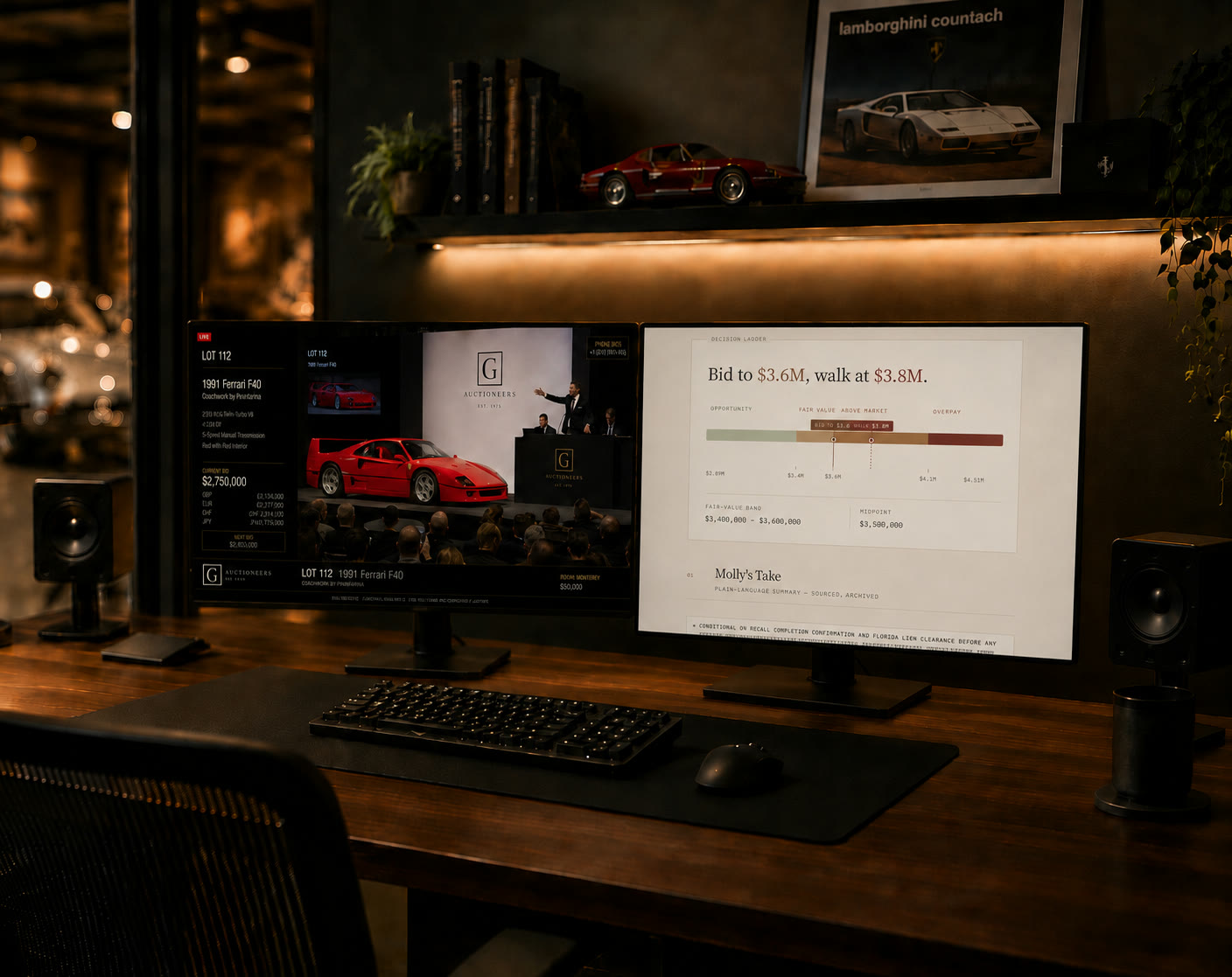
In your inbox the same day: supportable value, comps, provenance and title, conditions to close, the liquidation read, and the analyst chat that answers what the credit committee asks next.
05 · Questions
Asked, answered.
What exactly arrives?
A thirty-to-fifty page file on the one car: the supportable value with tier and confidence stated, the comparable-sales analysis with every sale linked, the ownership and title chain, lien and recall checks, the conditions to close, the liquidation read, and the full citation ledger. Plus the analyst chat, grounded in that file alone. A print-grade PDF laid out for the credit file.
Same day. Really?
Send the VIN by mid-morning and the file is in your inbox that evening, US time. Desks that need a range faster than that run the comp report first: year, make and model in, a sourced band out in about a minute, no VIN required. The full file follows on the cases that need it. A car with an unusually deep archive can run to the next morning; if it will, you hear that up front, not after.
How is this different from a price guide?
A guide is a lookup. This is research. A guide has no row for the pre-war car, the modified car, the import, or the application with no VIN, and a condition-graded book number has no evidence trail a partner bank or an auditor can click through. Every number here traces to a recorded sale, and when the evidence is too thin the file says so instead of guessing. Keep the guide for the easy cases. This is for the ones that would otherwise go to an appraiser.
What do you need from us?
The car, never the borrower. A VIN or a year, make and model, the mileage, the requested advance if you want the policy screen, and your reference number so the row ties back to your system. No applicant data, no PII, and no integration with your loan origination system.
Can we hand it to a partner bank or an auditor?
That is what it is for. Every price links to a recorded sale, every claim to a source URL with an accessed date, and the PDF is laid out for the credit file. A reviewer who was not in the room can retrace every step, which is the difference between a number and a defensible one.
What does it cost?
Desks buy a subscription that covers comp reports for every underwriter, with full files priced per report for the cases that would otherwise go to an appraiser. Pilots run sixty days with every dollar credited to the first year. Pricing comes in writing after a short call, scoped to your volume, and nothing is charged before then.
What if the record is thin?
Gaps are findings. The file names every gap in the chain, what the gap does to value, and what document would close it. An undocumented decade priced as documented is exactly the kind of thing the value of record exists to catch.
Is this an appraisal?
It is a market-value opinion with the evidence attached, not a USPAP appraisal or a condition report, and it expresses no lending terms. The credit decision stays with your underwriter, the same as with a guide or an appraiser. The difference is that here they can click through to every comparable and every source.
06 · Contact
Put Molly on your next file.
Tell us what your desk underwrites and roughly how many cars a month cross it. We reply within one business day to set up a short call, and if it helps, we run a report on a car from your own book first.
Know the collateral before you fund the loan.